This article first appeared in Trade Finance Global on May 7th 2026.
As digital platforms increasingly dominate the cross-border trade space, one key element that is integral to easing access to trade finance is digital guarantees.
Guarantees in trade finance are bank-issued, written undertakings that ensure sellers are compensated if a buyer fails to meet their obligations. Digital guarantees are the paperless version of this process, offering instant delivery, enhanced security, and increased transparency.
For digitalisation to happen at scale and for traders to embrace its benefits fully, integration across digital platforms and digital guarantees is crucial.
Doğa Usanmaz, Reporter at Trade Finance Global (TFG), heard from Joshua Kroeker, CEO at Mitigram, on their recent partnership with Digital Vault Services (DVS) and its impact on the wider trade finance realm, from risk reduction to emerging market access to financing.
Doğa Usanmaz (DU):
What drove Mitigram’s collaboration with DVS, and what was the process behind it?
Joshua Kroeker (JK):
Our ambition at Mitigram is to provide a best-in-class solution for guarantees that enables corporates to manage the full lifecycle of digital guarantees, while giving them better control over their bank risk and internal workflows.
As we looked at the market, it became clear that connectivity is essential. Corporates need to interact seamlessly with their banking partners, but the existing channels, such as SWIFT and EBICS, do not provide the option of digital issuance nor the level of connectivity that DVS has.
This is what drove the collaboration with DVS: to create the digital rails that sit between corporates and banks, enabling guarantees to move seamlessly across institutions and jurisdictions without being confined to closed user groups or siloed ecosystems.
Corporates can manage their guarantees consistently across banking partners and across markets, constrained by local infrastructure differences. On the other hand, banks can now invest in DVS infrastructure and connect with all our clients seamlessly.
DU:
What does the collaboration look like on a technical level? How does this partnership support the adoption of open, interoperable guarantees for the global market?
JK:
In the partnership, we are combining Mitigram’s workflow and execution capabilities with DVS’s secure digital guarantee vault infrastructure to create an end-to-end solution for guarantees.
We have created a single, digital process – from wording negotiation through issuance and amendments, and finally to release, giving corporate treasury and trade finance teams a connected workflow. Applicants will be able to submit, amend, track and release guarantees in real time, with direct routing to their guarantors. This gives corporates continuous visibility into their statuses, expiration dates and outstanding exposures, all in one place.
The technical foundation of this collaboration is the practical application of open standards. Using an API framework allows for there to be a direct link between Mitigram’s execution environment and DVS’s guarantee vault.
DU:
Why is it important that guarantees are digitalised? Are digital guarantees more effective than paper ones in mitigating risk in trade finance?
JK:
Digital guarantees change how corporates manage risk. This is not just about replacing paper, but about using a centralised system to govern workflows across multiple banking relationships.
Today, corporates have limited visibility into fees, expiry timelines or their exposure across different banks. A digital guarantee changes that by turning the guarantee into structured, actionable data that can be automatically read, validated, and reconciled by enterprise resource planning (ERP) and treasury systems, without needing manual intervention. This gives corporates the visibility and control needed to manage guarantees as part of their broader treasury and risk strategy.
When guarantees are issued on paper, the overhead of tracking and physical storage is only half the problem. The real cost lies in the return process; physical documents must be couriered back to the bank, holding up precious credit capacity in the interim. Digital guarantees eliminate this lag. A simple click triggers an instant release, freeing up limit availability and accelerating deal flow.
DU:
How do digital trade finance platforms facilitate overseas trade agreements for markets operating under high fragmentation and diverging conditions? (e.g. the European Union (EU)-Singapore Digital Trade Agreement)
JK:
Digital platforms play a critical role because they provide the operational layer that connects corporates and banks across global markets. As financial institutions adopt shared infrastructure like DVS, the benefits of digitalisation extend into international guarantees, including cross-border transactions and re-issuances. We look forward to widespread adoption, as such agreements are an important nudge, encouraging banks to embrace common infrastructure even when hosted outside their home jurisdictions.
DU:
What drove Mitigram’s expansion into Asia?
JK:
Our presence in Asia reflects our broader commitment to serving the global trade industry. Trade is inherently cross-border, and our role is to support that ecosystem wherever our clients operate. We will continue to build strong partnerships and key relationships that allow us to deliver consistent value across regions.
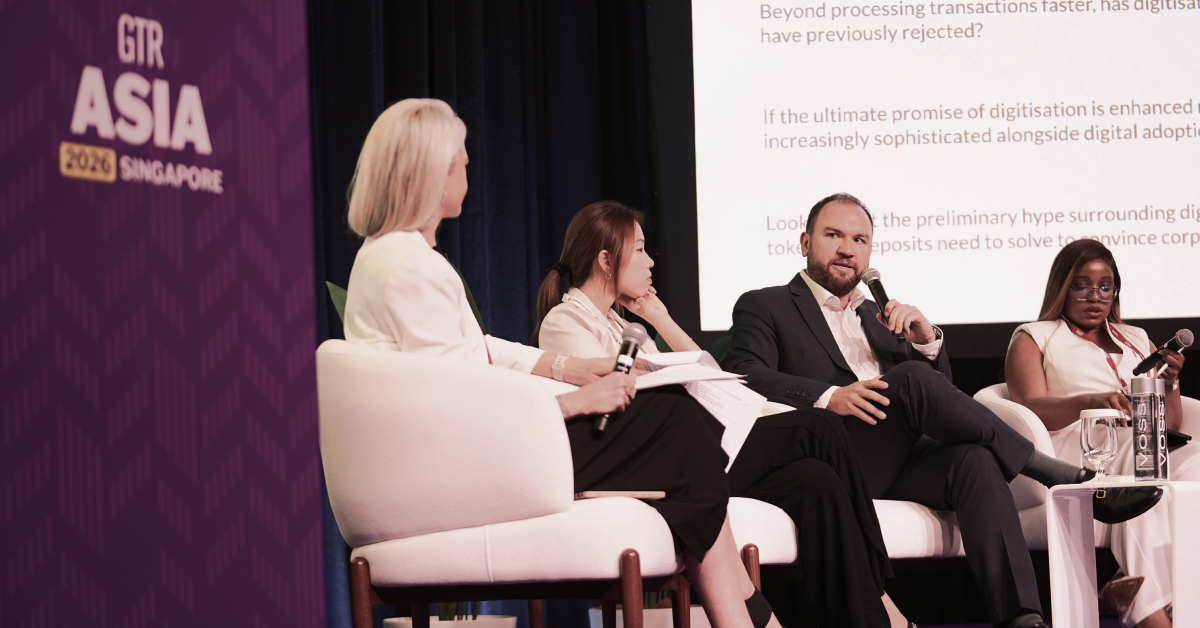
Mitigram has long been embedded in Asia’s trade ecosystem. Our regional hub in Singapore has allowed us to cultivate a robust network across Southeast Asia – a region that acts as the heartbeat of global commerce, yet continues to be one of the regions worst affected by the global trade finance gap. Whether in Asia or Africa, the aim is for banks to transition from manual legacy processes to data-driven execution, bringing efficiency to processes that were previously paper-based.